

We don’t exactly associate Japan with dynamism today. However, Japan did have about 30 years of very rapid catch-up growth after the Second World War dubbed the “Japanese Economic Miracle”. So did France during the “Trente Glorieuse”. Confronted by “The American Challenge” (1967) both nations used industrial policy to enter the computer industry in the 1960s and 1970s. In a previous blog we’ve looked at the French effort:
Can you feel the Giscardpunk?

Valéry Giscard d’Estaing served as President of France from 1974 to 1981. In the general public he may be the least well known French President of the Fifth Republic. Yet in recent years he experienced a surprising online renaissance. On Reddit a community of nearly 30’000 users celebrate “
However, the French efforts in the digital sphere, namely the Plan Calcul and Unidata, failed. In contrast, the Japanese efforts to enter the computer industry succeeded with companies like NEC, Fujitsu, Hitachi, Toshiba & Sony. Indeed, for a while Japan was so successful that there were two separate books titled “The Japanese Challenge” (1970, 1980).
In this post we’ll look at how the Japanese playbook in this era differed from the French playbook. More broadly, we can view MITI-era Japan and its entry into computers (1970s–1990s) & semiconductors (1970s–1980s) as the blueprint for the “Asian Tigers” and other “East Asian Miracles”. Including:
South Korea’s entry into semiconductors (1980s–1990s) & smartphones (2000s–2010s)
Taiwan’s entry into semiconductors (1980s–1990s)
China’s entry into e-commerce (2000s–2010s), smartphones (2010s–2020s), cloud computing (2010s–2020s), & semiconductors (2010s–2020s).
Whether and how such a model of export-oriented industrial policy can be applied to modern day Europe can be contested. However, as industrial policy has seen a resurgence globally, and as Europe again attempts a digital catch-up, I think it’s worth looking at digital catch-ups that have worked and extract some lessons.

The MITI-era Japanese Model
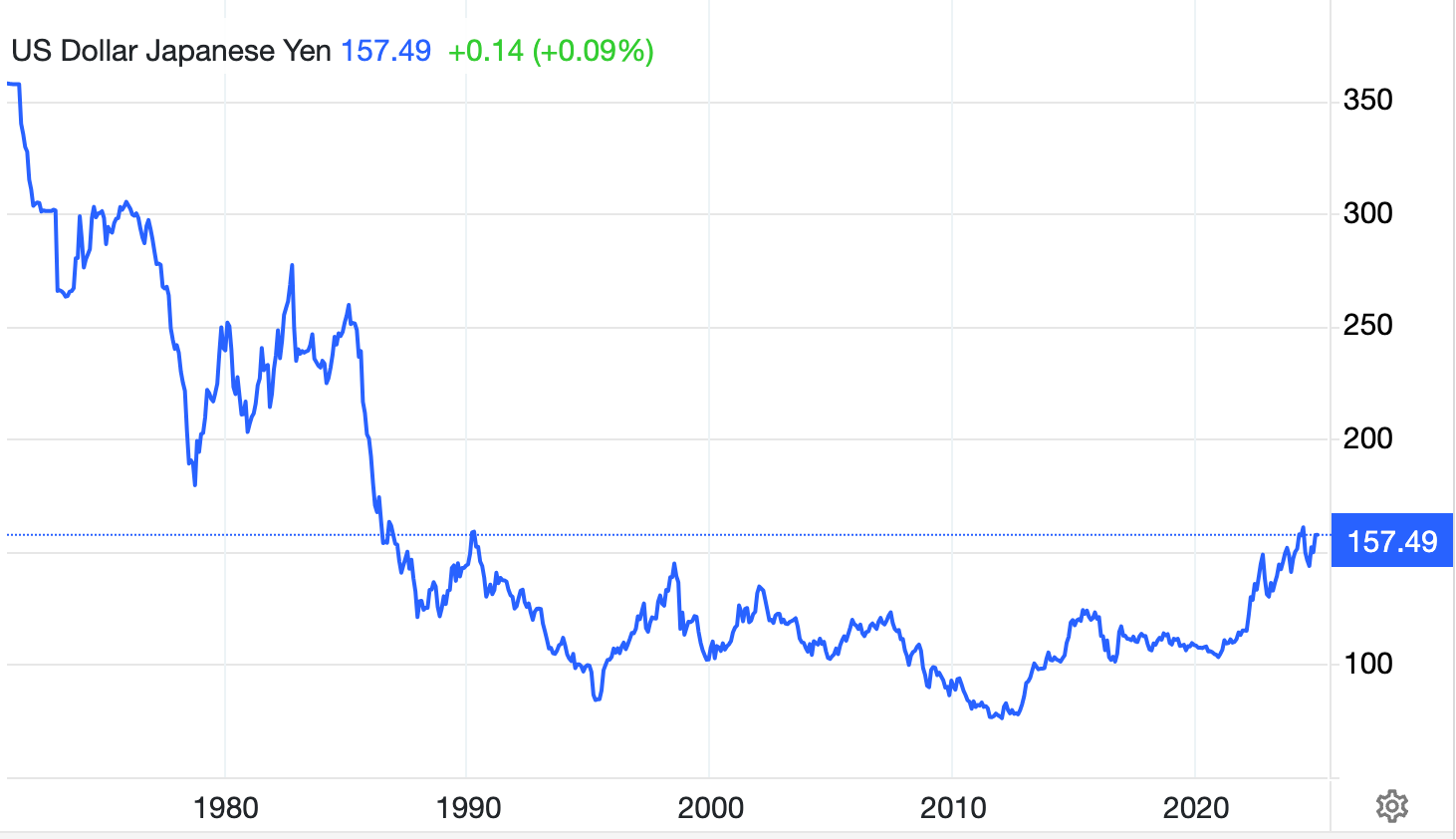
The system: The high-growth system or “state monopoly capitalism” was put into place in 1954. It combines two elements. First, the state identifies strategic industries and supplies loans, tax breaks, public infrastructure, land, and assistance in technology transfer to these industries on terms not available to the rest of the private sector.1 Second, it is an export-led growth model in which the domestic currency is kept weak to prioritize the export industry over domestic consumption.
MITI: The Ministry of International Trade and Industry (MITI) was a small, elite bureaucracy that identified which target industries should be developed, then chose the most suitable support methods for state intervention using market-conforming methods. One of the key enabling laws for MITI was the Enterprise Rationalization Promotion Act (1952).2
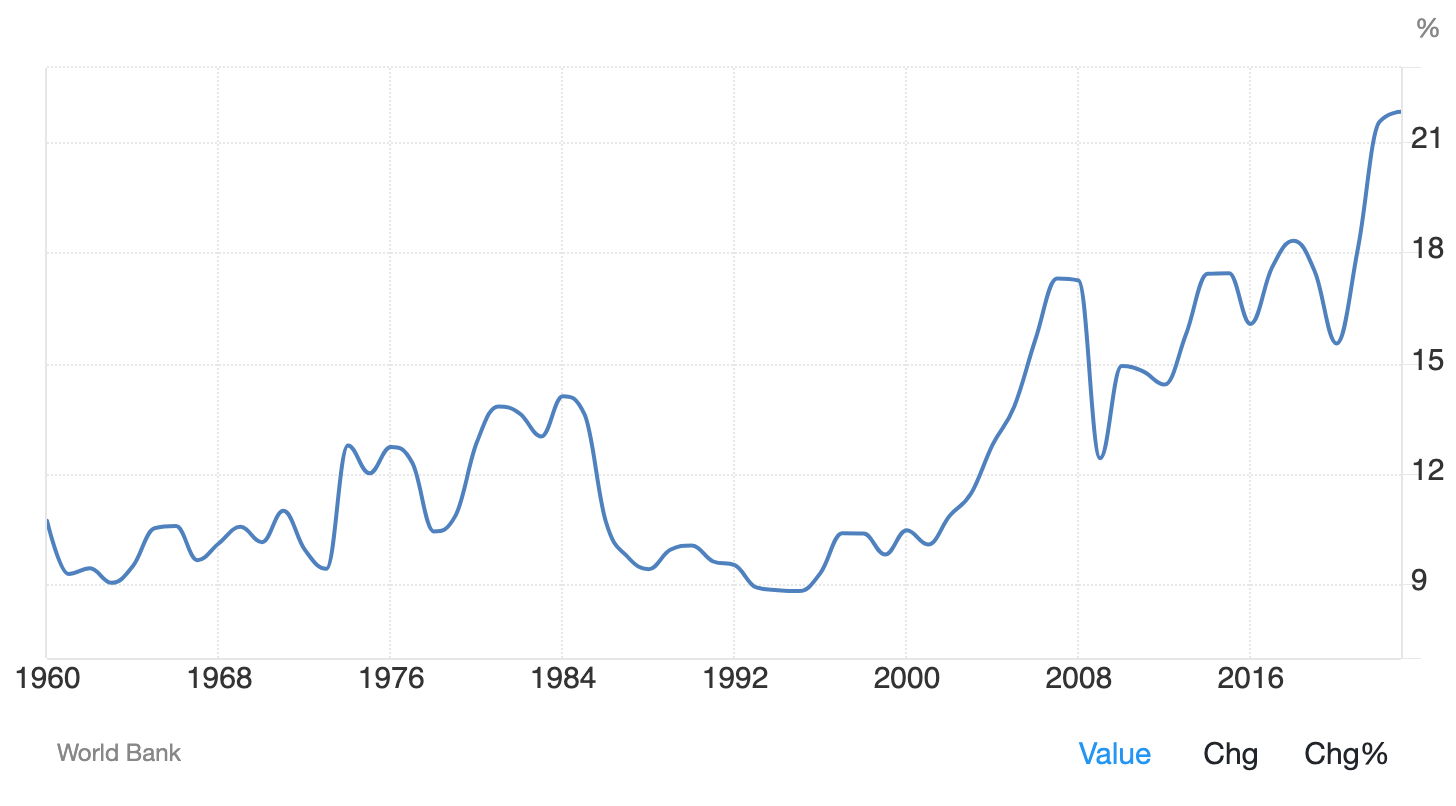
Japan Development Bank: MITI screened all industrial loan applications and made annual estimates of the shortfall between available and needed capital. Over time, the relative size of the loans of the Japan Development Bank compared to other domestic banks decreased. However, the bank retained its power to informally “guide” other banks with its decisions to support or not support a new industry.3
The pushback: The Japanese system changed when the US had enough of it. This most notably includes the Plaza Accord, a compelled appreciation of the Japanese currency in 1985 and a series of less prominent bilateral agreements, such as the 1986 US-Japan Semiconductor Agreement. The appreciation of the Yen contributed to a sugar-rush bonanza of Japanese domestic consumer spending (the Japanese Asset Price bubble), which was followed by years of stagnation. MITI itself was merged with other agencies into a new department called METI in 2001.
MITI vs Plan Calcul
Civilian focus: MITI’s efforts were more clearly focused on the consumer market.
Compelled licensing: MITI successfully exerted pressure on IBM to license its patents to Japanese computer firms with a limited mark-up.4 This allowed Japanese firms to build internationally compatible computers.
Export orientation: Overall, the French effort put more emphasis on subsidizing research and domestic demand through public procurement. The Japanese model was more export-oriented.
Lesson 1: Industrial policy vs. innovation policy
The Draghi Report frames the US-Europe gap as an “innovation gap”. Accordingly, the most expensive suggested measure seems to be a doubling of public R&D grants from 100 to 200 billion Euros per 7 years. I prefer the framing that Europe has a “technology gap”, or, more precisely, a “digital industry gap”. Why does this distinction matter?
In 2010 another group of the European Commission’s JRC had analysed the difference between US and European R&D intensity and found that “the lower overall corporate R&D intensity for the EU is the result of sector specialisation (structural effect) – the US has a stronger sectoral specialisation in the high R&D intensity (especially ICT-related) sectors than the EU does, and also has a much larger population of R&D investing firms within these sectors.” In other words, Europe had less digital R&D because it had a smaller digital industry, rather than vice versa.
I’m not against publicly funded R&D and I am in favor of tax credits for R&D by private companies in key sectors. Europe should innovate more and there is a role for academia (and I am happy that Switzerland is part of Horizon Europe again). However, the broader goal can only be to build a competitive European industry. AI has graduated from academia. The research breakthroughs in AI are coming from industrial labs and they are increasingly not published anymore. So, Europe needs more digital industry.
Japan and East Asian Economies have never fully bought into free markets. Rather they followed Friedrich List5 and the historical school of economics, which, depending on the context, can encourage industrial policy (incl. the use of tariffs, subsidies, and other state interventions) to enter strategic industries.
Lesson 2: Industrial policy requires export discipline
Industrial policy can be a controversial subject. The entries of Japan, South Korea, Taiwan, and China into global digital markets are all examples of successful industrial policies. At the same time, there are even more examples of failed industrial policies.
If there is one common feature that all of the above examples possess and that most unsuccessful examples do not possess, it’s export discipline. In other words, rather than picking a winner, subsidies to an infant industry are given based on the volume of successful exports. With subsidies contingent on exports, companies must compete on the global market rather than relying solely on protected domestic sales. This reduces the risk that firms will merely seek rents and overcharge customers at home without innovating.
By forcing multiple domestic companies to compete abroad, policymakers also gain clear and critical information about which companies are genuinely competitive, enabling them to decide which firms to support and which to let fail.
Lesson 3: Patient capital
A prominent feature of East Asia’s post-war development was the use of patient capital – long-term, state-guided financial support that was willing to wait years (even decades) for returns and that prioritized industrial loans over consumer loans
Japan established the Japan Development Bank (JDB) in 1951 as a government-backed lender to provide low-interest, long-term loans to industries critical for modernization. This patient capital lowers the cost of capital for strategic industries, allowing them to invest heavily and it insulates them from potential short-term market shocks.
Importantly, even as its share of total lending shrank from the 1950s to the 1980s, the JDB continued to serve as a signaling mechanism to private banks about the industries or firms deemed strategic and credit-worthy.
Takeaways for Europe
As with any analogy, there are a number of caveats.
The East Asian miracles all started out with low labor costs. Does the higher relative starting point for Europeans change something?
The last three decades of liberal triumphalism in the US, which enabled easy export-led growth with hidden subsidies, is over. The Trump administration puts a strong emphasis on reducing the US export deficit, fair trade, and competing with China.6
High levels of political-economic coordination can eventually be captured by rent seekers. I am not sure that South Korea or Japan have fully solved this issue. Industrial policy can also not replace actions that encourage more bottom-up dynamism. The East Asian models are not necessarily the best here. South Korea has a lower number of unicorns than Germany. Japan has fewer unicorns than Brazil.
Still there are a few takeaways from the East Asian models, that are worth considering for Europe:
It’s worth at least asking whether a focus on an “innovation gap” that can be closed through public R&D is the right framing. The East Asian miracles are not stories of public R&D but of much more encompassing industrial policy.
If Europe were to decide to do industrial policy it’s important to not abandon market validation: export discipline, export discipline, export discipline!
It would seem unrealistic and undesirable for Europe to move to a more closed financial system with capital controls as in East Asia. However, the more generic lesson here may be that financial markets are shaped by incentives. If Europe wants to design markets in a way that makes public debt artificially cheap, it can.7 If it wants to enable more dynamism and more venture capital - as the Draghi Report hints at - it can.
Thanks to Emma McAleavy, Fin Moorhouse & Rob L'Heureux for valuable feedback on a draft of this essay. All opinions and mistakes are mine.
Here is roughly how it worked in a seven step model:
Policy Formation: MITI conducted investigations and drafted a policy outlining the industry's necessity and prospects (e.g., Petrochemical Industry Nurturing Policy (1955)).
Funding: Foreign currency allocations and financial support were provided by MITI and the Development Bank.
Technology Licenses: Licenses were granted for importing essential foreign technologies.
Strategic Designation: The industry was classified as "strategic," enabling accelerated depreciation benefits.
Land Support: Improved land was offered either free or at minimal cost for industrial facilities.
Tax Incentives: Key tax breaks included customs exemptions on machinery, duty refunds on petroleum products, and specific tax exemptions.
Administrative Cartel: MITI established an administrative guidance group to regulate competition and coordinate investments.
Chalmers Johnson. (1982). MITI and the Japanese Miracle: The Growth of Industrial Policy, 1925-1975. Stanford University Press. pp. 236-237.
This law included:
Financial Support for Innovation: The law provided government subsidies for installing and testing new equipment, along with tax exemptions and accelerated amortization for research and development investments.
Depreciation Benefits: Designated industries were allowed to depreciate 50% of the costs of modern equipment in the first year of installation.
Infrastructure Development: The central and local governments committed to constructing ports, highways, railroads, power grids, gas networks, and industrial parks at public expense, making them available to designated industries.
MITI influenced commercial bank lending through the central bank’s rediscounting system. Commercial banks could get extra funding from the central bank if they lent to key industries, especially exporters, allowing them to lend beyond their deposits. Since banks relied on this support to stay liquid, they followed MITI’s guidance on where to direct loans. This gave the government control over credit flow without needing strict regulations.
“Sahashi wanted IBM’s patents and made no bones about it. In as forthright a manner as possible, he made his position clear to IBM-Japan: ‘We will take every measure possible to obstruct the success of your business unless you license IBM patents to Japanese firms and charge them no more than a 5 percent royalty.’ In one of his negotiating sessions, Sahashi proudly recalls, he said that ‘we do not have an inferiority complex toward you; we only need time and money to compete effectively.’ IBM ultimately had to come to terms. It sold its patents and accepted MITI’s administrative guidance over the number of computers it could market domestically as conditions for manufacturing in Japan.”
Chalmers Johnson. (1982). MITI and the Japanese Miracle: The Growth of Industrial Policy, 1925-1975. Stanford University Press. p. 247
“Along the way, Korean bureaucrats were reading not the rising American stars of neo-liberal economics, or even Adam Smith, but instead Friedrich List. The Korea and Taiwan scholar Robert Wade observed when he was teaching in Korea in the late 1970s that ‘whole shelves’ of List’s books could be found in the university bookshops of Seoul. When he moved to the Massachusetts Institute of Technology, Wade found that a solitary copy of List’s main work had last been taken out of the library in 1966.”
Joe Studwell. (2014). How Asia Works: Success and Failure In the World's Most Dynamic Region. p. 95
Rather than assuming universal economic laws, List emphasizes that economic policies must be tailored to the specific historical, geographical, and social conditions of each country. List argues that the laissez-faire policies championed by classical economists like Adam Smith and David Ricardo are based on conditions suited to already-developed economies. He contends that these policies can be detrimental to nations that are still industrializing. A key element of his theory is that young industries need temporary protection from international competition (through tariffs, subsidies, and other state interventions) until they can achieve economies of scale and technological advancement.
Having said that, the US tariffs are not targeted and clearly spread over too many countries. In other words, rather than responding tit-for-tat this might also be viewed as an opportunity to respond with targeted industrial policy on strategic industries that Europe wants to enter.
For example, for capital requirements the risk of a lot of government debt has been legally defined as 0%. See Capital Requirements Regulation