

The People of the Middle Waters (“𐓏𐓘𐓻𐓘𐓻𐓟 𐓁𐓣𐓤𐓘𐓯𐓣”) are a Native American tribe that lived autonomously in the Midwest. The Louisiana Purchase transferred their homeland from nominal French sovereignty to American control. Over the years, as American settlers expanded, the tribe was gradually forced to cede its territory to the US government and relocated to what seemed like worthless land in Oklahoma. Then, in 1897, the first oil was discovered on their land. By the 1920s, the tribe, which is called the Osage Nation in English, suddenly had the highest per capita income of any group in the world. Through a system of “headrights”, Osage received a share of the oil profits peaking at more than 10x US GDP per capita between 1920 and 1926.
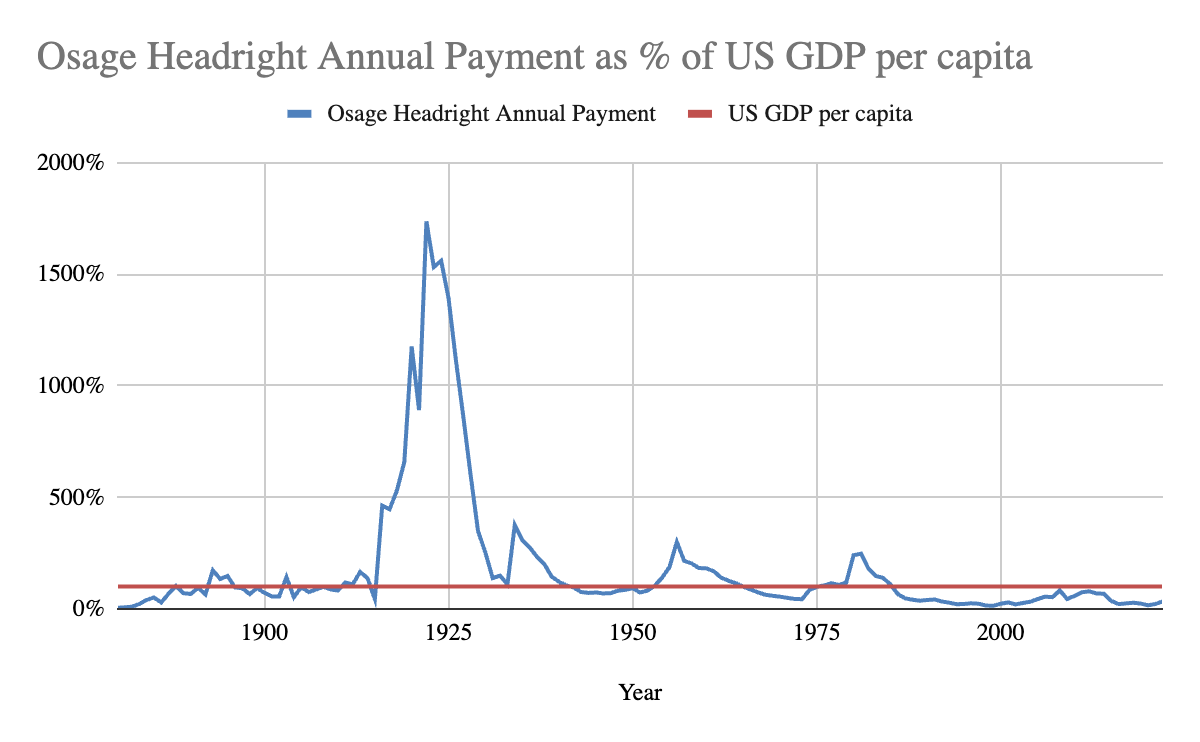
Yet, the peak oil boom is not fondly remembered in Osage history. Not because they failed to set up a Hartwickian Sovereign Wealth Fund (which they should have!), but because of the “Reign of Terror“ in which outsiders married into Osage families, and then murdered them for their inheritance. This tragic story is well documented in David Grann’s book Killers of the Flower Moon and the subsequent Scorsese film.
A small, relatively powerless indigenous population. Sitting on vast natural resources they don’t yet know the value of. At the dawn of a technological transformation that will make those resources immensely valuable and a massive source of non-labor income.
History doesn’t (and shouldn’t!) repeat but sometimes it rhymes. What the Osage Nation was for the Industrial Revolution, Greenland may be for the Singularity.
Why does the Trump administration want to buy Greenland?
There have been many speculations as to why over the last few months. Some of the answers likely have some or a lot of truth to them. However, at the end of the day most conventional arguments for buying Greenland are not very convincing to me.
1. It’s not the frozen fish
Greenland has a GDP of 3.3 billion USD. An acquisition would only add ca. 0.01% to US GDP. Greenland’s biggest export is frozen fish.
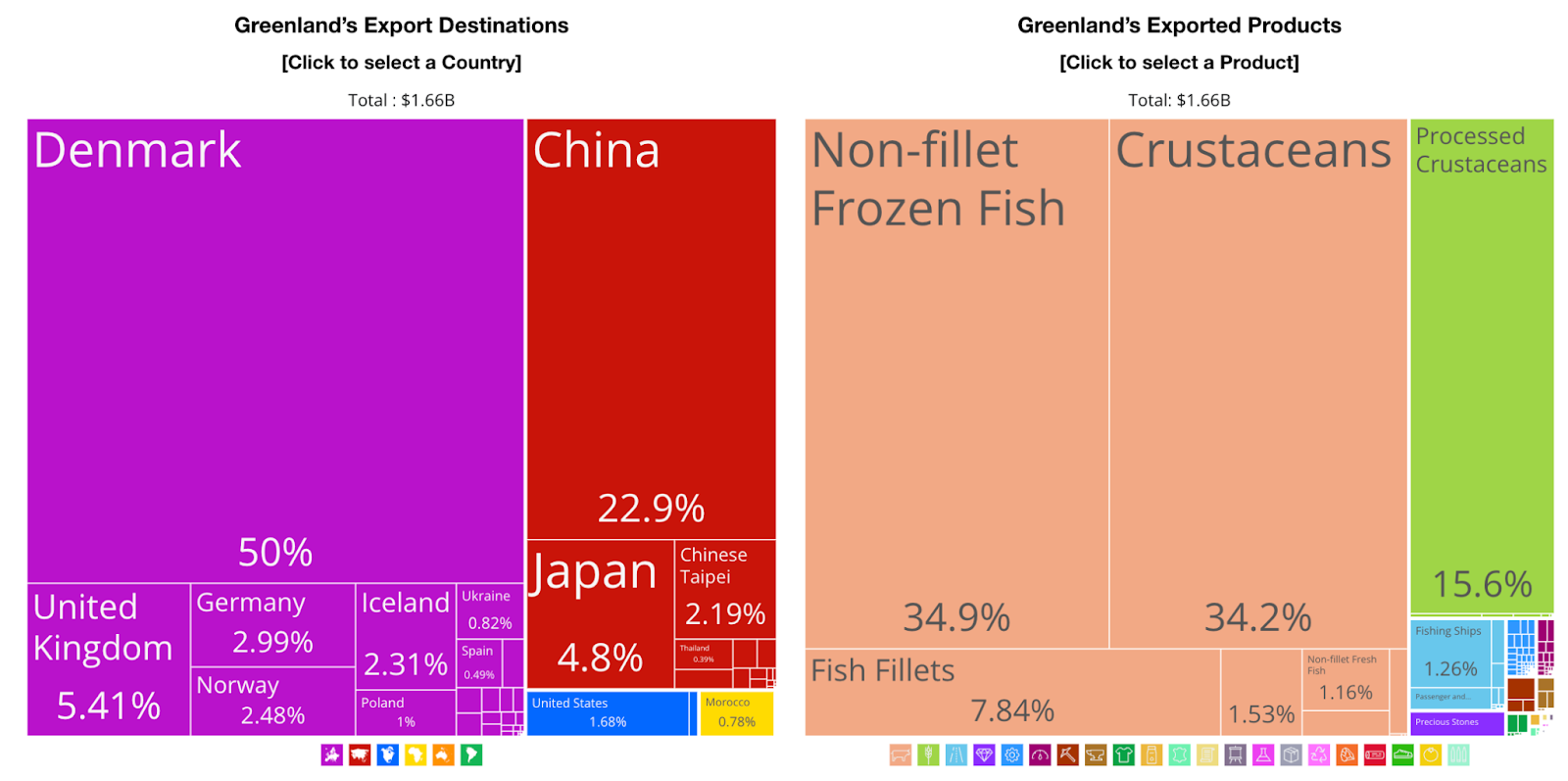
Its biggest *import* is oil.
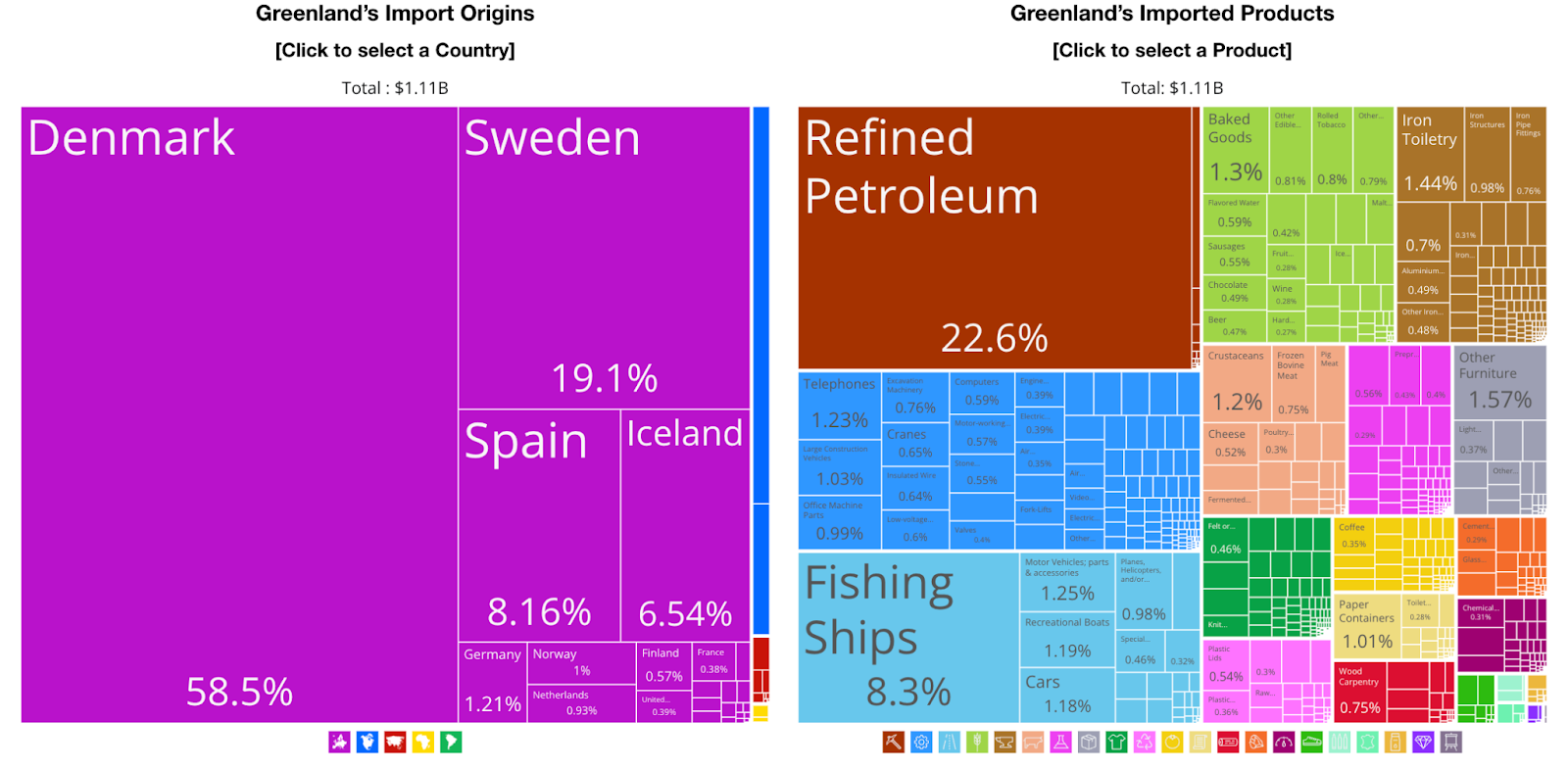
Overall, Greenland is not exactly profitable to Denmark. With the 2009 Act on Greenland Self-Government Danish taxpayers have committed to annually subsidize Greenland with 3’439.6 million Danish Krone annually adjusted for inflation. This amounts to about 600 million USD per year. This is 20% of Greenland’s GDP and half of its government revenue.
2. It’s not climate change either
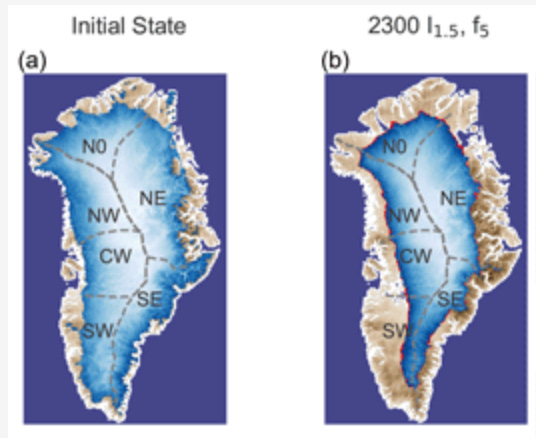
Greenland cannot compete with Hawaii or Puerto Rico as a holiday destination. It is mainly ice and some ice bears. Climate change may *eventually* Make Greenland Green Again, but climate change is slow and the Greenland Ice Sheet is up to 3 km thick. On the current IPCC trajectory, the coastline Tundra can expand a bit but most of Greenland will still be covered by ice in 2300 even in the high emission reference scenario (RCP 8.5).
3. The military security argument is not very convincing
Greenland is strategically relevant because it represents an airspace buffer between Russia and the US, the GIUK Gap for submarines, and eventually the Northern Sea Route for trade. Then again, Denmark is already a military ally of the US and the US has been operating Thule Air Base on Greenland since 1943, recently renamed Pituffik Space Base. It might make sense to invite Denmark and Greenland into NORAD for integrated early warning particularly in case of a nuclear attack. However, Trump’s threats are much more likely to destroy than to expand NORAD. Similarly, Greenland may be useful for the Golden Dome missile defense, but if you want to put components there, the by far easiest option would have been to just ask?
Denmark and Greenland have pushed back against another US proposal during the Cold War. Project Iceworm was the US plan to have loads of nuclear missiles in deep tunnel networks under the Greenland ice sheet. However, in their defense, most countries would not be super happy either if they find out mid-way that their allies “science project” in their country is a front for nuclear missiles.
So, buying Greenland has limited security upsides. The US can keep a military base that no one tried to take away from them in the first place. Meanwhile, the downside of armed aggression against Denmark is that it would trigger the EU’s mutual defence clause (Art. 42(7)) against 27 member states, including a nuclear power. This would create a reverse “Sino-Soviet Split” with potential cascading effects that are hard to overstate from the disintegration of the Internet to the disintegration of financial markets. It’s trading ASML for frozen fish. Somewhere between very bad and catastrophically bad.
4. All for the memes?
Greenland does look great on Mercator projections. And maybe it’s not a problem that Greenland is cold and desolate. Elon Musk doesn’t want to colonize Mars because it’s easy. Indeed, making Greenland more habitable is still much easier than terraforming Mars. So some have framed Greenland as a frontier for the Western Man to plant his flag again. Praxis. Hyperamerica.
I would dismiss the “Greenland as the new Mars” meme if it weren’t for domestic US politics. Since the 1960s immigration has often been placed at the center of the American origin story. The US as a “nation of immigrants”. In contrast, the current US administration sees immigration as an existential threat to American culture and identity. So, it is not surprising if they want to revive the previously dominant origin narrative, which was the frontier thesis.
Frederick Jackson Turner’s 1893 essay “The Significance of the Frontier in American History“ argued that American democracy, individualism, and national character were forged by westward expansion. This narrative gradually lost steam as the frontier closed. The Trump administration may want to re-open the frontier to forge a new American origin narrative. At least that’s how I read the whole “penguin meme” (from Greenland to ICE).
Still, there are much more valuable things to mine in Greenland than content.
Greenland is worth trillions of dollars
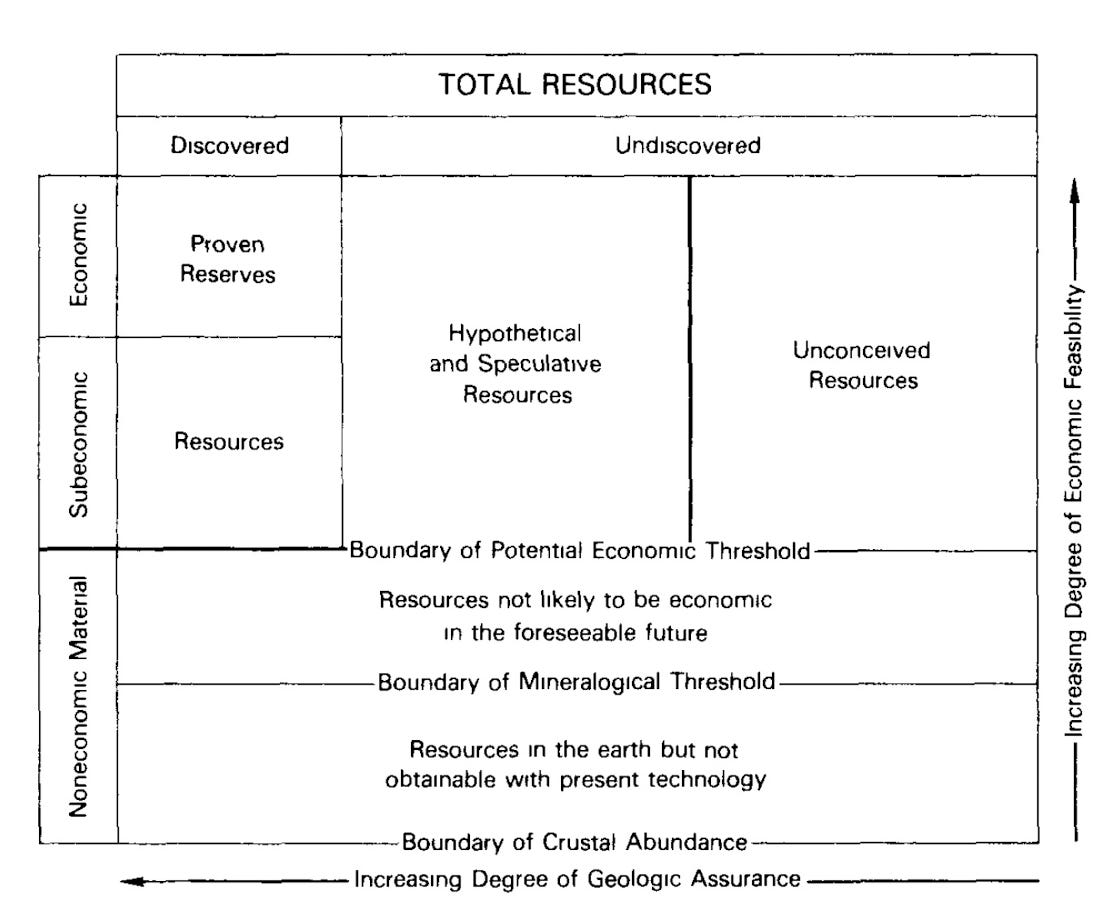
You may have heard that Greenland is rich in minerals. Greenland possesses 25 of 34 minerals the European Commission considers “critical raw materials”. However, as we have seen above Greenland is currently barely exporting any minerals. The answer to this paradox lies in the McKelvey box. A way to categorize resources based on the geologic certainty of their presence (x-axis) and the economic viability of resource extraction (y-axis).
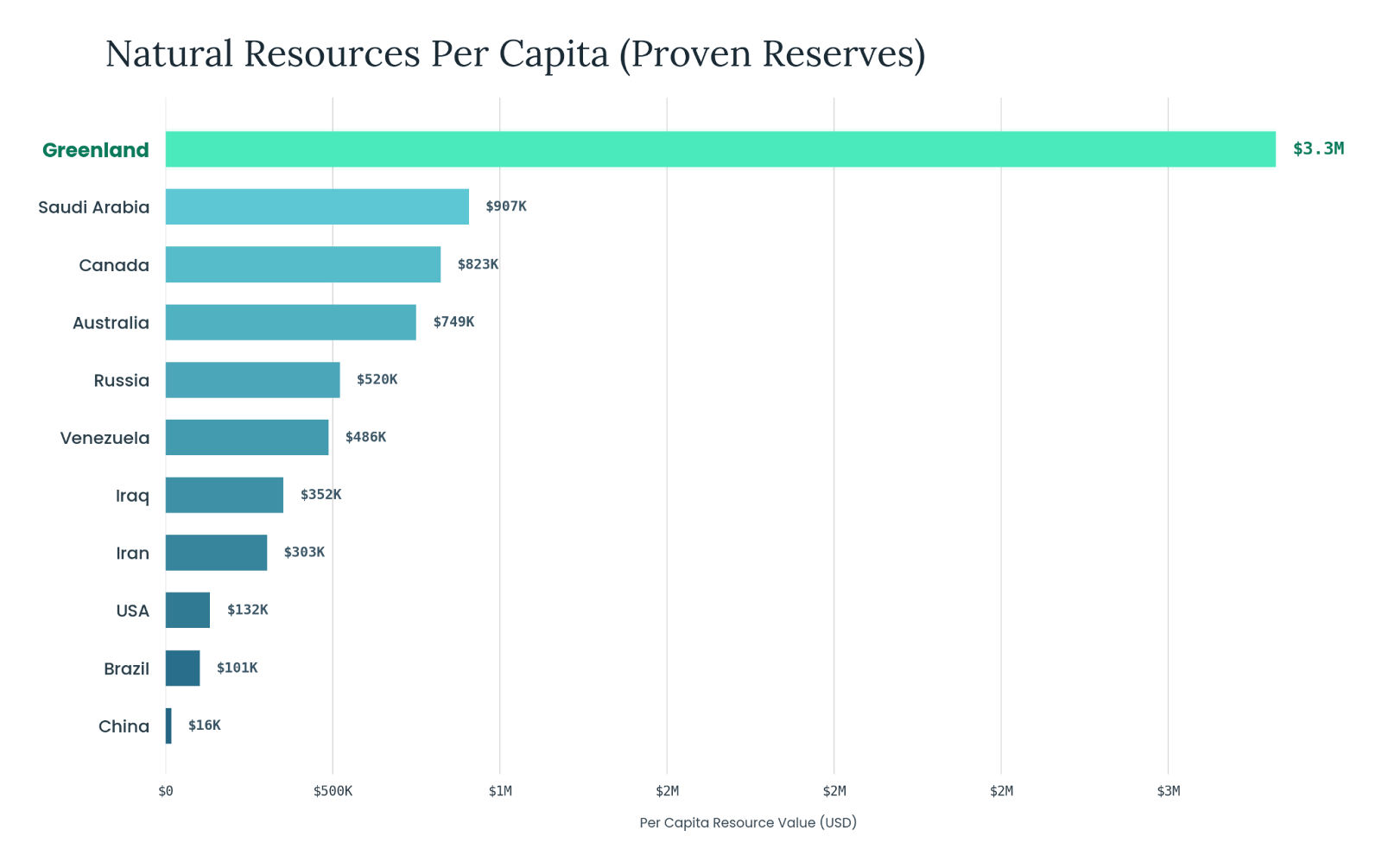
There are only two mines at production stage in Greenland, Nalunaq Gold Mine and White Mountain Anorthosite Mine. Licensed sites that will come online in the near future include Amitsoq (Graphite), Tanbreez (REE), Kvanefjeld (REE), and Disko-Nuussuaq (Nickel-Copper). The US Geological Survey lists 1.5 million tons of rare earths as Greenland’s proven reserves. The American Action Forum estimates that the total economically viable reserves of Greenland are about $186 billion. At the same time Greenland only has 56’700 inhabitants. So, if we list Greenland on its own, this would arguably give it the largest natural resource endowment per capita in the world.
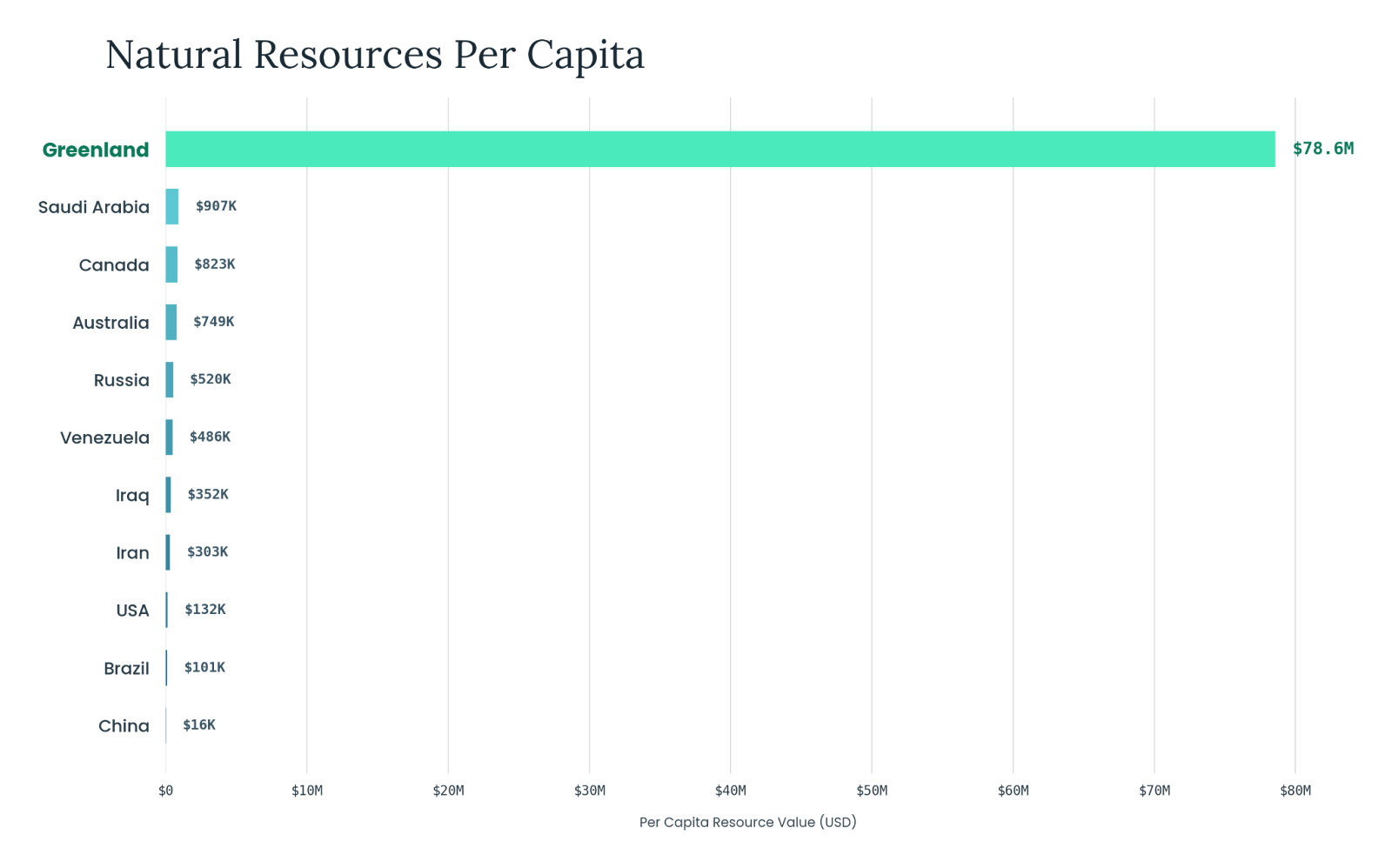
Yet, that’s still very conservative. Because most of Greenland’s known resources are currently not economically exploitable. For example, the Kvanjefield rare earth site alone includes a resource inventory of 1.01 billion tons of ores with 1.1 % Total Rare Earth Oxide, equivalent to ca. 11 million tonnes. The known resources of the host rock of the Tanbreez site include about 4.7 billion tons of ore with 0.6% Total Rare Earth Oxide, amounting to ca. 28 million tonnes. Similarly, the US Geological Survey estimates that there are about 31’000 million barrels of oil equivalent in the East Greenland Rift Basin. Counting these as known resources, the American Action Forum arrives at a resource value estimate of approximately $4.4 trillion.
And that’s still an understatement of total resources. Essentially, all discovered resources in Greenland are near its coastline where it’s easier to conduct geological surveys and where mines might be more economically viable.
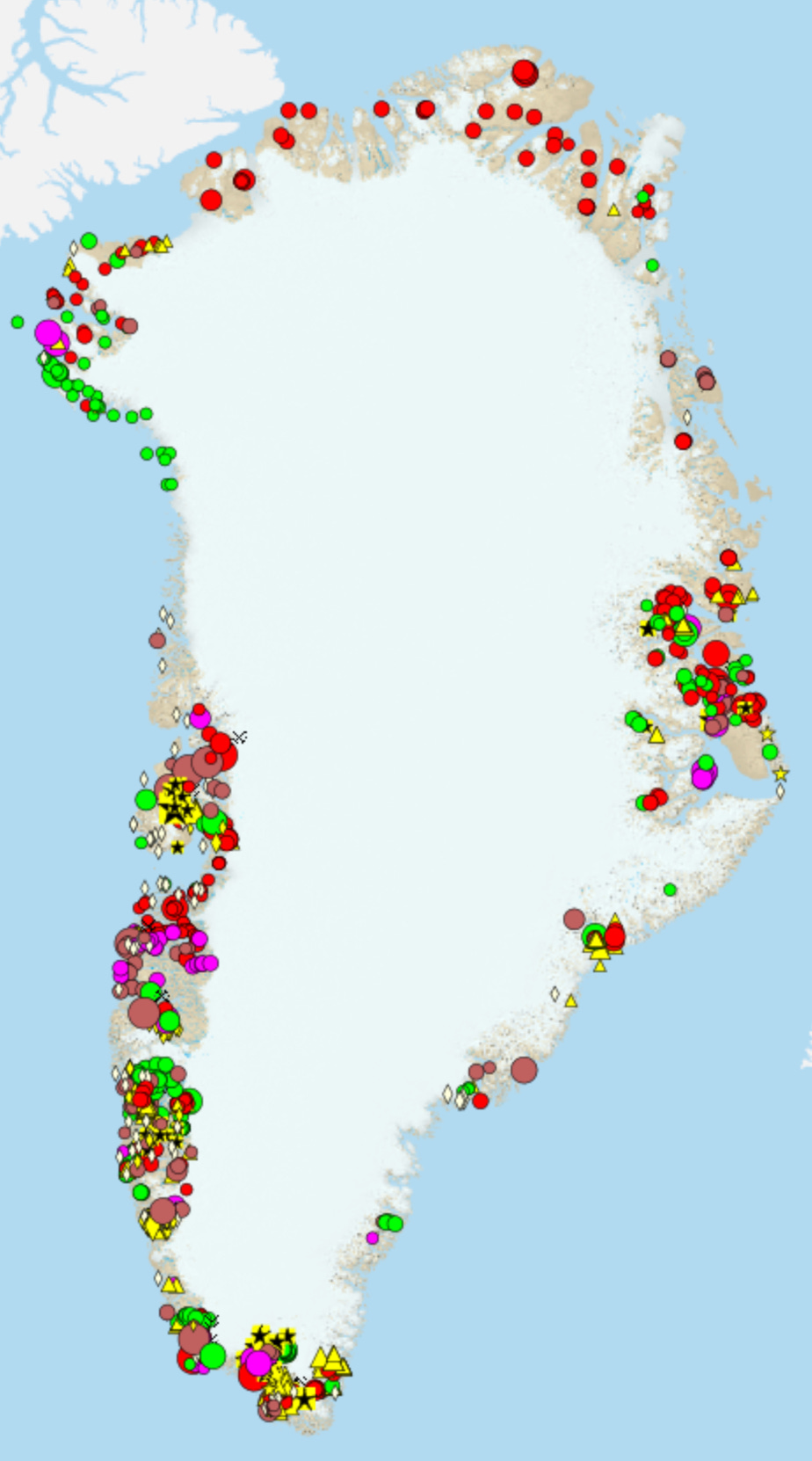
However, based on high level aeromagnetic surveys and gravity anomalies it’s likely that the area under the Greenland Ice Sheet is mineral-rich as well. So, the total speculative resources on all of Greenland could reasonably turn out to be an order of magnitude higher. Something like 40 trillion USD or about 700 million USD per Greenland inhabitant.
Now we might say, speculative resources don’t matter that much in practice. However, this is an AGI-pilled blog and natural resources are interesting because they’re “AGI-proof” in the sense that demand for them tends to grow with economic output and they’re hard to relocate for tax avoidance. They’re also commonly accepted as shared endowments as most economic value is extracted from pre-existing materials rather than created from scratch. Hence, resource wealth can be one way to create sovereign wealth funds that can offer financially sustainable payouts to citizens.


Second, if we accept faster technological progress in the coming decades, this implies a faster expansion of what’s commercially viable in a McKelvey box. Mining technologies improve. Energy costs fall. Resources that once were speculative shift to become discovered and economically viable for exploitation. I’ve previously written about what this could mean for the deep seabed, the Antarctic, and space resources.

Greenland? Underrated!
Greenland is still very much underrated. Not primarily because of climate change or because of its strategic location, but because it has a lot of speculative resources. These resources seem remote today but may become much more real in a future with significant technological progress.
This arguably makes Greenland the most AGI-proof territory in the world, even more so than Norway. However, as the cautionary tale of the exploitation Osage shows this wealth can be a double-edged sword. So far, I don’t think anyone has tried to strategically marry a Greenlandic citizen as a personal insurance for a post-labor economy. Still, if the geopolitical interest in Greenland is significant today, I expect it to become even higher tomorrow.
As one US lawmaker stated, a military invasion of Greenland would be “weapons-grade stupid”. The costs of destroying the West today would vastly outweigh any conceivable future benefit. A much better question to ask is how allies can leverage the future potential of Greenland as a win-win-win. Any such effort should start with native Greenlanders as well as Denmark and the EU, given territorial sovereignty, self-determination, and financial support. The US has a legitimate stake in this too, given its investment in regional security. But think equity - not invasion.
The history of Greenland’s resource riches is still to be written, and hopefully we can make it a happier story than that of the Osage.
Thanks to Ariel Patton, Andrew Burleson, Konrad Seifert, & Benedict Springbett for valuable feedback on a draft of this essay. All opinions and mistakes are mine